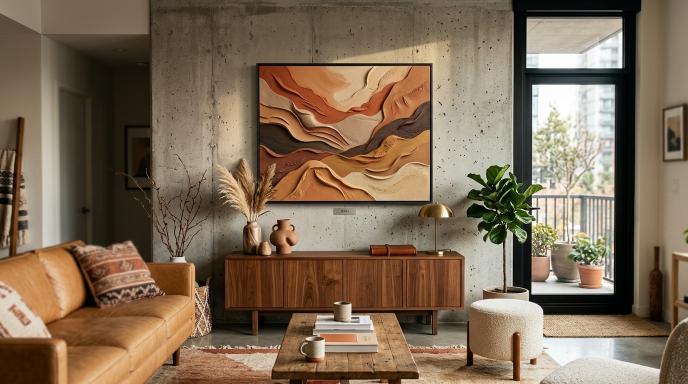
Wall Canvas Painting BD: Size, Frames and Buying Checklist
How to Choose a Wall Canvas Painting in BD
A wall canvas painting should fit your space in more than one way. Its size should suit the wall, its colours should work with the room, and its construction should match what the seller describes.
When shopping for wall canvas painting in BD, compare the full product details before deciding from the display image. A room mockup can make even a small canvas look like a substantial statement piece.
Start by writing down the usable wall width and your preferred orientation: horizontal, vertical, or square.
Understand Canvas Size and Framed Size
The listed size may refer to the canvas alone. A surrounding frame can add to the total width and height. Ask for both measurements if the piece needs to fit between windows, above a console, or inside a wall panel.
Depth matters too. A deeper frame projects farther from the wall, which may be relevant in a narrow passage.
Use this checklist when comparing products:
| Detail | What to confirm | | --- | --- | | Canvas dimensions | Width and height, with units | | Overall dimensions | Total size including any frame | | Orientation | Horizontal, vertical, or square | | Surface | Original paint, printed image, or raised texture | | Edges | Painted, wrapped, unfinished, or framed | | Hanging | Finished weight and included hardware |
Do not assume all canvas products are hand-painted. A canvas print is a different product, even when the image reproduces an original painting.
Choose One Canvas or a Set
One large canvas gives the eye a clear focal point. A pair or a three-piece set lets you spread the arrangement across a wider area.
For a set, calculate the entire arrangement, including the gaps. Three canvases that are each 30 cm wide, with two 5 cm gaps, occupy 100 cm of wall width. That total is the useful number when you compare the set with your furniture.
Mark the complete layout before ordering. Keep the spaces between pieces consistent unless the design intentionally calls for another arrangement.
Match the Frame to the Room
A slim dark frame can create a defined edge on a light wall. A wood-tone frame can connect the painting with furniture. A frame close to the wall colour can keep the focus on the artwork.
These are styling options rather than rules. If the piece already has a strong border or detailed composition, adding a visually heavy frame may be unnecessary.
Ask to see the actual frame finish. A digital mockup may not accurately show its colour, depth, or corner construction.
Think About the Surface Before Hanging
Texture needs space to be seen. A raised cream design on a cream wall can work well if the frame or shadows give it enough definition. If everything blends together, compare a slightly darker frame or a piece with more tonal variation.
For a colourful painting, choose one existing room colour to repeat. You do not need every cushion, curtain, and canvas to match exactly.
Avoid choosing a location simply because the wall is empty. Check whether an open door, tall furniture, or a strong reflection interrupts the view.
Confirm the Order in Writing
Before payment, confirm the artwork type, measurements, frame, final price, delivery arrangements, and any custom-design terms. Ask how the piece should be handled and cleaned after arrival.
You can explore handcrafted canvas-based texture art at SleekyOne. Bring a wall measurement and an outline of your preferred layout so the size discussion is specific from the start.