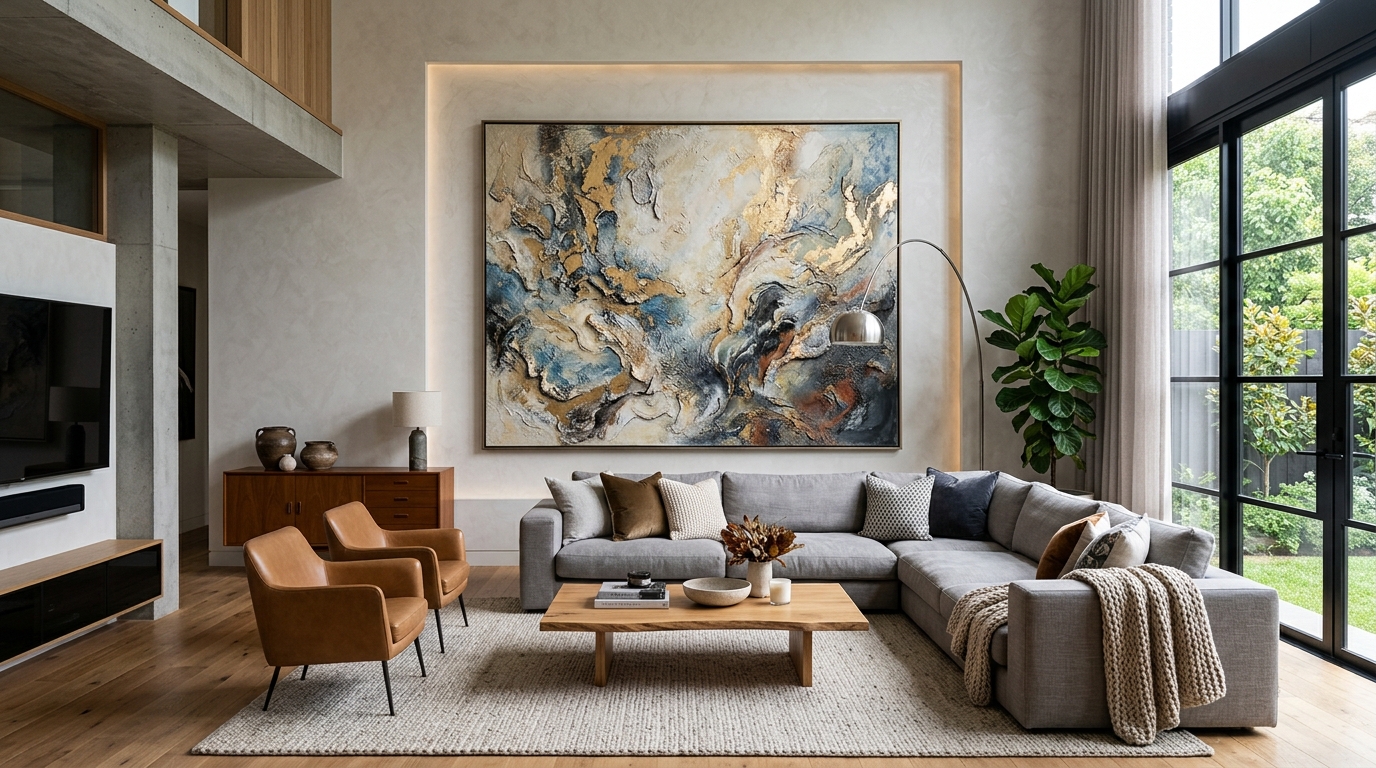
Wall Decoration Design: Principles That Make Your Walls Look Professional
Wall Decoration Design: The Difference Between Random and Intentional
Anyone can hang something on a wall. But wall decoration design — creating a deliberate, cohesive, visually pleasing arrangement — is a skill. The good news? It follows clear principles that anyone can learn.
Professional interior designers don't have magic eyes. They follow rules of scale, proportion, colour, and balance. Once you understand these rules, your wall decoration will look like it was styled by a pro.
Principle 1: Scale and Proportion
The most common wall decoration design mistake is wrong scale — art that's too small for the wall, or too many small items that create visual noise.
The 60-75% Rule
Your wall decoration should fill 60-75% of the available wall space. This leaves enough breathing room to look intentional, not crammed.
Example:
- Wall width: 8 feet → Art should be 5-6 feet wide
- Wall above sofa (6 feet): Art should be 3.5-4.5 feet wide
Proportional Grouping
When using multiple pieces, the total group should still follow the 60-75% rule. Three small frames in a row should span at least 60% of the furniture below.
Principle 2: Visual Balance
Balance doesn't mean symmetry. There are two types:
Symmetrical Balance
Mirror-image arrangement — same pieces on both sides of a centre point. This creates a formal, orderly feel.
Best for: Above beds, formal dining rooms, traditional interiors.
Asymmetrical Balance
Different items that carry equal visual weight. A large painting on one side balanced by a cluster of three smaller items on the other side.
Best for: Living rooms, creative spaces, modern interiors.
Principle 3: The Rule of Thirds
Divide your wall into a 3×3 grid (like a tic-tac-toe board). The most visually impactful positions are where the grid lines intersect. Place your main piece at one of these intersections, not dead centre.
Exception: Above furniture (sofa, bed), centring the art IS the correct choice because the furniture anchors it.
Principle 4: Colour Harmony
Your wall decoration design should have a colour story — a deliberate relationship between the colours on your wall and the colours in your room.
Three Colour Approaches
Monochromatic: Different shades of the same colour family. A cream wall with ivory, beige, and gold art creates depth without contrast.
Complementary: Colours opposite each other on the colour wheel. A teal accent wall with copper/terracotta art creates vibrant energy.
Analogous: Colours next to each other on the colour wheel. Green, teal, and blue art together creates harmony.
The 60-30-10 Rule
- 60% — Dominant colour (your wall paint)
- 30% — Secondary colour (your furniture/curtains)
- 10% — Accent colour (your wall art provides this pop)
Principle 5: Layering and Depth
Great wall decoration design isn't flat — it has layers.
Ways to Create Depth
- 3D texture paintings add literal depth with raised surfaces
- Floating shelves at different distances from the wall
- Leaning art against the wall instead of hanging (creates casual depth)
- Overlapping frames where one piece slightly covers another's corner
Depth makes your wall feel curated and collected, not like a flat display.
Principle 6: Negative Space
The empty space around your wall decoration is just as important as the decoration itself. Negative space gives your eye a place to rest and makes each item feel more important.
Common Mistake
Filling every inch of wall space. This creates visual overwhelm and makes the room feel smaller.
Better Approach
Leave at least 25% of your wall empty. A single beautiful piece surrounded by clean, empty wall creates a museum-like impact that a crowded wall never can.
Principle 7: Eye-Level Placement
The centre of your artwork should be at eye level — approximately 57 inches (145 cm) from the floor. This is the museum standard used worldwide.
Adjustments:
- In rooms where you're mostly sitting (dining room, living room), lower it slightly — 48-54 inches
- Above furniture, hang 6-12 inches above the furniture's top edge, regardless of eye level
Putting It All Together: A Wall Decoration Design Process
- Measure your wall and identify the focal point
- Choose a colour palette based on your room's existing colours
- Select a hero piece (3D texture painting, large canvas, mirror)
- Decide on balance (symmetrical or asymmetrical)
- Test placement with paper cutouts before hammering nails
- Add supporting elements (shelves, small frames, plants) last
- Step back and evaluate from the room's entrance — that's the first impression
Professional Results, DIY Budget
You don't need an interior designer to create beautiful wall decoration design. You need:
- One quality centrepiece (invest here)
- An understanding of the principles above
- Patience to test before committing
At SleekyOne, our 3D texture paintings are designed to be that centrepiece — the hero piece around which your entire wall decoration design revolves. Handcrafted in Dhaka, delivered nationwide.
Send us your wall dimensions and we'll recommend the perfect size and style for your space.