Wall Canvas Painting vs Texture Canvas Painting: A Buyer’s Guide
What Separates a Canvas Painting from a Textured Canvas Painting?
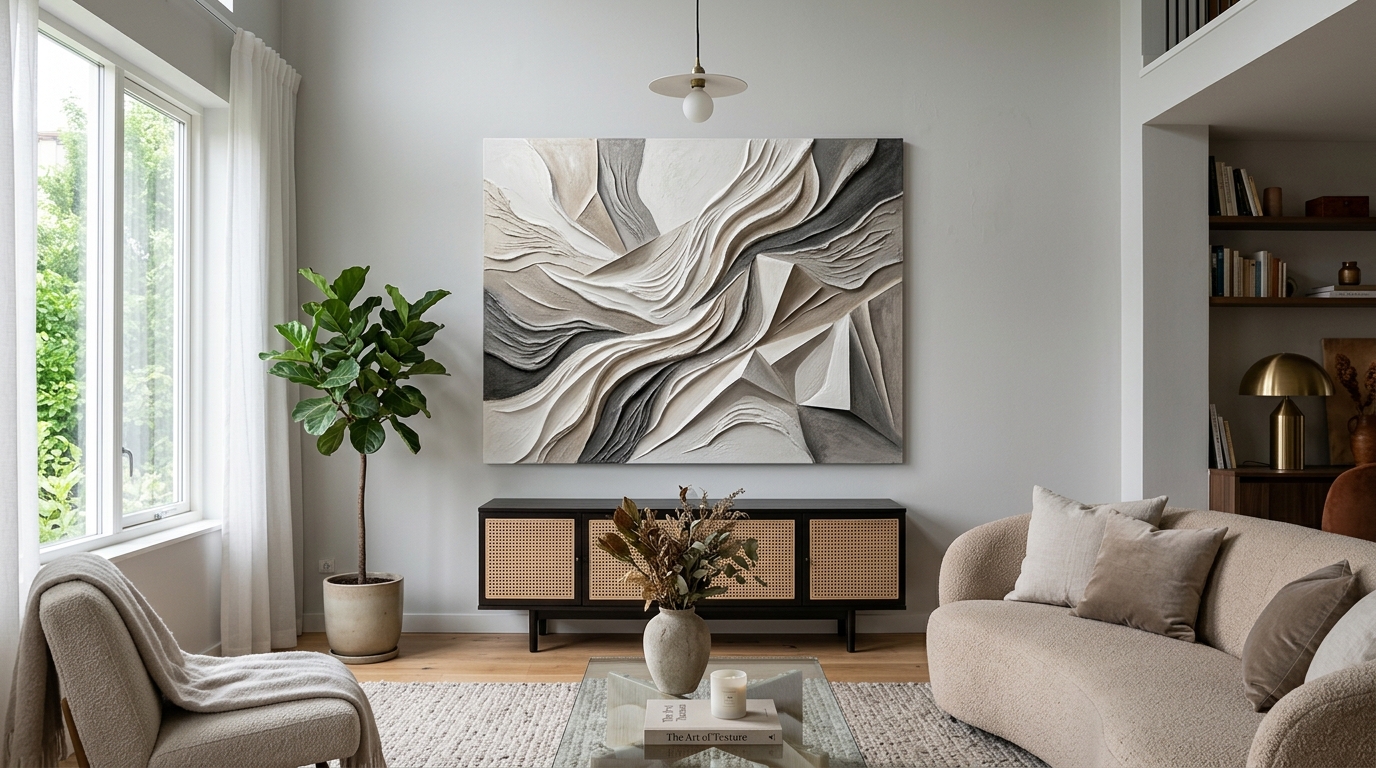
A wall canvas painting is artwork made on canvas and displayed on a wall. A texture canvas painting also uses a canvas support, but its raised surface is a deliberate part of the design.
These are not completely separate categories. A conventional painting can have visible brushstrokes, while a textured artwork can include smooth areas. The useful question is how much the surface contributes to the piece when you see it in person.
For this comparison, “smooth canvas painting” means an artwork with relatively little surface relief. “Textured canvas painting” means one designed around noticeable raised details.
How They Look in a Room
Smooth paintings usually draw attention through their subject, colour, composition, and brushwork. A landscape, floral painting, or abstract composition can add a clear story or colour accent to the room.
Textured paintings add another feature: shadows across the surface. Ridges, petals, arches, or other raised shapes can look different as the direction of the light changes.
A photograph taken straight on may not show this difference clearly. Before ordering a textured piece, ask for a close-up and an angled video. For either type, request a full view so you can judge the overall composition.
Compare Before Buying
| Question | Smooth canvas painting | Textured canvas painting | | --- | --- | --- | | What creates the visual interest? | Subject, colour, and painted marks | Colour, composition, and raised form | | How important is side lighting? | Helpful, but not always central | Can make relief more visible | | What should you inspect? | Paint detail, edges, frame, and colour | Those details plus relief depth and condition | | Is it necessarily lightweight? | Check the finished weight | Check the finished weight | | Is it necessarily handmade? | Confirm whether it is a painting or print | Confirm materials and how it was made |
A textured appearance in a product photo does not prove that an item has physical relief. Printed photographs of textured paintings can look convincing online.
Match the Artwork to the Viewing Distance
Think about where people will see the piece. Above a sofa, the artwork needs to read well from across the room. In an entryway, people may also notice the small details at close range.
For example, a cream botanical texture painting could suit an entry wall with a wooden console. A colourful smooth canvas might be a better choice if the main goal is to connect the room's blue cushions and rust-coloured rug.
Neither option is inherently more luxurious. Scale, finish, composition, and placement matter more than the category name.
Check Handling and Care Requirements
Raised areas can be vulnerable to knocks or pressure, depending on their materials. Ask how the painting should be lifted, packed, and cleaned. Do not assume that a textured surface can be wiped with a damp cloth.
Likewise, a smooth canvas is not automatically washable. Follow the maker's instructions for the particular artwork. Avoid placing either type against a damp wall or where it will be repeatedly splashed.
A Simple Way to Choose
Choose smooth canvas art if the subject or colour story is your main priority. Choose textured canvas art if you enjoy sculptural detail and the way light interacts with a surface.
Before ordering, confirm the dimensions, total framed size, weight, hanging hardware, and whether the photographed piece is the exact item you will receive.
To discuss a handcrafted textured option, visit SleekyOne with your room photo and preferred colour palette. That gives the conversation a clearer starting point than choosing from a close-up alone.